Among the Ancient Cypress Trees
Where the Forest Meets the Water
Massive trunks, knees at the shoreline, Spanish moss, ferns, and humid forest light define the landward half of Florida’s spring country.
Paddle Into the Quiet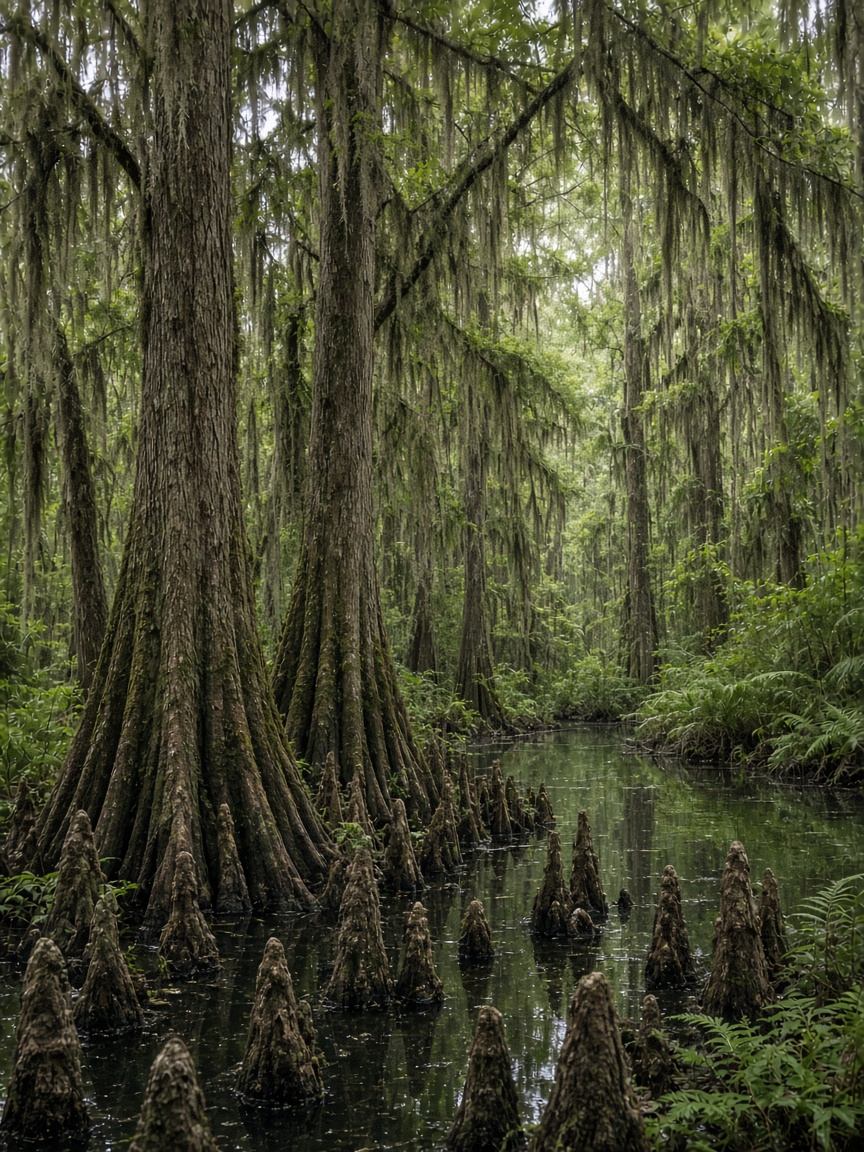
Walkways Through the Green
Boardwalks are the ethical camera rail of wet forests. They protect roots and soils while giving visitors a vanishing perspective into green depth. At parks such as Blue Spring, Wekiwa, and stretches near the Santa Fe corridor, wooden paths reveal how cypress architecture holds the shoreline together.
Cypress knees are woody projections rising from root systems. They are not trail furniture. Stay on designated paths. The hush of these forests is part ecological and part acoustic: soft ground, dense canopy, and water that absorbs noise.
Light Through the Canopy
- Early Morning — cool turquoise reflections and soft mist when air meets spring water.
- Bright Afternoon — golden shafts reach sandy bottoms in nearby spring runs.
- Quiet Evening — deep green reflections and slower bird traffic along the bank.
Forest days pair naturally with water days. After a boardwalk morning, shift to a short paddle described in Ichetucknee journey or study basins in the crystal springs chapter. Wildlife viewing ethics live in wildlife and manatees.
Responsible Forest Travel
Stay on Trails
Protect roots, soils, and nesting edges.
Leave No Trace
Pack out everything; keep springs free of litter.
Watch From Distance
Birds and mammals need quiet space to feed and rest.